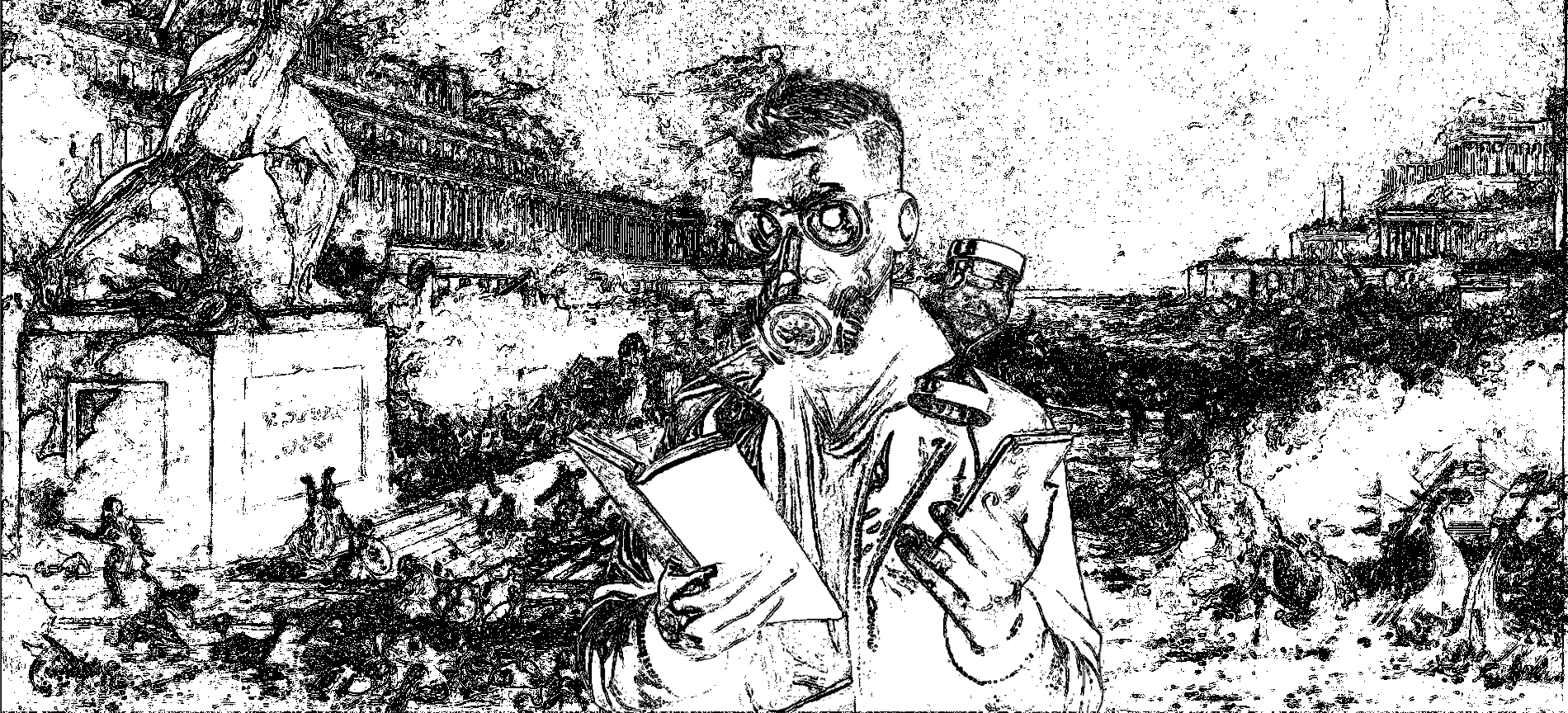
Desde hace un tiempo para acá, me causa un cierto extrañamiento existencial el hecho de haber nacido después del año 2000.
Para mucha gente esta generación no debió existir. El milenarismo y los diferentes mesianismos de finales del siglo pasado preveían el apocalipsis para el año 2000. Además, parece ser que cargamos con el peso del siglo pasado… con sus proyectos (algunos fallidos, otros no tanto), sueños y esperanzas.
Breve recordatorio: eres del futuro.
Nietos del 68’… pero a qué costo. Parece ser que quienes se ufanan con esta consigna no se dan cuenta de que se trata de una maldición que debe ser exorcisada.
No somos nuestros abuelos. Creo que lo que a primera vista es una desventaja en realidad puede ser nuestra principal ventaja. Si bien el no tener ningún contacto (más allá del literario o anecdótico) con el siglo XX nos priva de una experiencia militante particular, también nos libera del peso de la conciencia de la derrota. La cosa aquí es saber que para nosotros es más fácil liberarnos de ese peso que generaciones pasadas.
Es aquí donde entra mi lectura positiva del Fin de la Historia. ¿Qué hay más allá de la Historia? ¿Podemos asumirnos como entes post-históricos? El anacronismo, el acceso inmediato a grabaciones del pasado, los espacios mismos que habitamos (nuestra facultad, nuestra ciudad… ¿No es el centro histórico muestra del anacronismo y superposición de elementos culturales y tecnológicos que raya el surrealismo muestra de lo que trato de decir?) son muestras del pasado, pero nosotros venimos del futuro, del lejano año 2025…
Podemos vestir con moda de 1980, usar un celular del 2019, leer un libro del año 1930 en el metro…somos viajeros del tiempo y no nos hemos dado cuenta.
–Starless dream
From some time ago, i´ve felt some kind of oddness by the fact that I born after the year 2000. For many people, my generation should not exist… from many religious milenarisms to the near-end-of-millenium paranoia, All those people thought there would be no world after 2000.
In my point of view (as a post-2000 zoomer) it seems that we carry the weight of the past century, we carry with the hopes, dreams, and the failed projects they left us.
A brief reminder: you are from the future.
Grandchildren of 68’… but at what cost. It seems that those who boast about this slogan do not realize that it is a curse that must be exorcised.
We are not our grandparents. I believe that what at first glance appears to be a disadvantage may in fact be our main advantage. While having no contact (beyond the literary or anecdotal) with the 20th century deprives us of a particular militant experience, it also frees us from the weight of the consciousness of defeat. The point here is to know that it is easier for us to free ourselves from that weight than it was for past generations.
This is where my positive (acceleracionist?) reading of The End of History comes in. What lies beyond History? Can we assume ourselves to be post-historical entities? Anachronism, immediate access to recordings of the past, the very spaces we inhabit (our university, our city… Isn’t the downtown an example of anachronism and the superimposition of cultural and technological elements that borders on surrealism, an example of what I am trying to say?) are examples of the past, but we come from the future, from the distant year 2025…
We can dress in 1980s fashion, use a 2019 cell phone, read a 1930s book on the subway… we are time travelers and we haven’t even realized it.

Leave a Reply